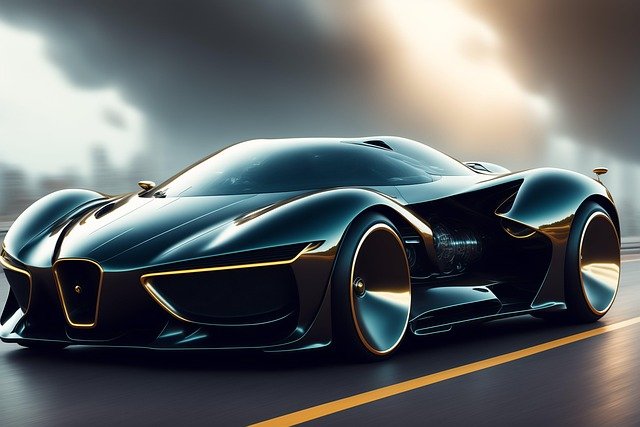
Imagine sketching a wild idea for a car on a tablet, only for a sophisticated AI to instantly transform it into a hyper-realistic, fully engineered 3D model, optimizing its aerodynamics, manufacturing cost, and even its carbon footprint—all before you've finished your coffee. This isn't science fiction anymore. This is The Future of AI in Car Concept Generation, a revolutionary shift that's not just enhancing design; it’s fundamentally rewriting the rules of automotive innovation. The industry is on the cusp of a radical transformation, where AI isn't just a tool, but a true co-creator, pushing the boundaries of what's possible, making cars faster, more efficient, more sustainable, and uniquely attuned to our desires.
At a Glance: AI's Impact on Car Concept Generation
- Design Cycles Shrink: What took months now takes days, thanks to AI generating and optimizing thousands of design variations.
- Hyper-Personalization: Buyers can co-create unique vehicles by simply describing their dream car in natural language.
- Sustainability by Design: AI optimizes everything from material use to aerodynamics, drastically cutting emissions and waste.
- Smarter Components: From battery placement to interior ergonomics, AI fine-tunes every detail for peak performance and comfort.
- Autonomous Aesthetics: AI helps integrate complex tech like LiDAR seamlessly while giving self-driving cars a "face."
- Key Technologies: Generative design, deep learning, and advanced additive manufacturing are the pillars of this revolution.
The Dawn of a New Era: Why AI is Rewiring Car Design
For decades, car design was a meticulous, often arduous process. Talented human designers would spend countless hours sketching, sculpting clay models, and refining every curve and line. Engineering teams would then painstakingly test these designs for feasibility, safety, and performance, leading to iterative cycles that could stretch over years. The process was slow, expensive, and, despite its artistic merit, inherently limited by human capacity and traditional tools.
Today, however, the automotive world is undergoing a seismic shift. By 2025, generative AI isn't just a buzzword; it's a cornerstone of innovation. This advanced form of artificial intelligence doesn't just analyze data; it creates. It learns from vast datasets of existing designs, engineering principles, and even consumer preferences, then uses that knowledge to generate entirely novel concepts. This capability is fundamentally reshaping how cars are envisioned, designed, and ultimately brought to life, promising an era of unprecedented speed, customization, and environmental responsibility.
Accelerating Creativity: How AI Supercharges the Design Process
One of AI's most profound impacts is its ability to compress the traditional design timeline from months to mere days. Imagine the sheer volume of design possibilities for a new car model: variations in body shape, material choices, aerodynamic profiles, and structural integrity. For humans, exploring a fraction of these options is a monumental task. For AI, it's just another Tuesday.
Generative AI algorithms, including sophisticated techniques like Generative Adversarial Networks (GANs) and diffusion models, can rapidly produce thousands of unique design variations. These aren't random doodles; they're designs optimized against specific parameters set by engineers and designers. Need a vehicle that's maximally aerodynamic while adhering to strict safety standards and embodying your brand's aggressive aesthetic? AI can churn out countless solutions, each a viable starting point, allowing human designers to focus on refining the most promising concepts rather than starting from scratch.
This means faster prototyping and quicker iterations. What once required building physical models for testing, now often begins with AI simulating wind flow in real-time, testing crash resistance virtually, and even optimizing part shapes before a single piece of material is cut. This speed means automakers can react to market trends with agility never before seen, bringing innovative concepts to showroom floors at a pace that was once unthinkable.
Your Car, Your Vision: The Rise of Hyper-Personalization
Remember the days of choosing from a limited palette of pre-defined options? Those days are rapidly fading into the rearview mirror. AI is ushering in an era of mass customization, where your vehicle can truly be a unique extension of your personality and needs.
Imagine inputting a text prompt like "a retro-futuristic SUV with integrated solar panels and a panoramic roof designed for urban adventurers." An AI system could take that description and, in moments, generate a series of 3D mockups. Platforms leveraging AI facilitate fusing different design styles, instantly turning 2D sketches into animatable 3D models, and allowing for real-time adjustments via simple text commands. It's like having a hyper-talented design studio at your fingertips, ready to interpret your every whim.
Companies like Porsche are already exploring this frontier with advanced AI configurators. These aren't just selecting paint colors; they allow for genuine co-creation, enabling buyers to participate in the early design phase, fine-tuning elements that were previously fixed. This level of personalization transforms the car-buying experience into a collaborative journey, making the final product not just a mode of transport, but a deeply personal expression. For those who love to explore endless possibilities, you can even explore the random car generator to spark your imagination and see what AI could bring to life next.
Driving Greener: AI's Role in Sustainable Automotive Concepts
The push for sustainability is paramount in the automotive industry, and AI is proving to be an invaluable ally in this mission. From material selection to energy efficiency, AI algorithms are optimizing designs to significantly reduce environmental impact.
Consider the weight of a vehicle: lighter cars require less energy to move, directly impacting fuel efficiency for internal combustion engines and extending range for electric vehicles (EVs). AI can analyze countless material combinations—from advanced carbon composites to high-grade steels—to identify the optimal balance of strength, weight, and cost for every single component. Toyota's 2025 bZ3X chassis, for example, leveraged AI to cut carbon fiber usage by an impressive 15%, leading to substantial material savings and a reduced carbon footprint.
Beyond materials, AI plays a crucial role in maximizing EV energy efficiency through aerodynamic tweaks. By simulating wind flow and drag in real-time, AI can suggest minute adjustments to a vehicle's shape that dramatically improve its ability to slip through the air. The Mercedes-Benz 2024 Concept CLA, for instance, showcases how AI-optimized aerodynamic profiles can push the boundaries of EV range.
Furthermore, AI reduces manufacturing waste by optimizing part shapes and nesting patterns for cutting materials, ensuring the most efficient use of every sheet of steel or composite. This holistic approach to sustainable design means that the cars of tomorrow will not only be more efficient on the road but also more responsibly produced from the ground up.
Smarter Cars, Smarter Components: AI's Impact on Vehicle Engineering
AI's influence extends far beyond the exterior shell, delving deep into the intricate engineering of internal components and user experience.
For aerodynamics, human designers can only test so many physical prototypes. AI, however, can simulate wind flow over a vehicle in real-time, instantly highlighting areas of turbulence and suggesting rapid, minute adjustments to body panels, spoilers, and underbody elements to reduce drag. This iterative optimization dramatically improves fuel efficiency and EV range.
In electric vehicles, battery and motor placement are critical for weight distribution, safety, and energy efficiency. AI algorithms can analyze countless layouts, considering factors like cooling, crash safety, and manufacturing constraints, to determine the most optimal configuration. This ensures that every inch of space is utilized effectively, maximizing performance and safety.
Even interior design and ergonomics benefit from AI. By analyzing vast datasets of user interaction, posture, and biometric data, AI can suggest optimal placement for controls, infotainment screens, and seating configurations. This leads to interiors that aren't just aesthetically pleasing, but also intuitively functional, reducing driver fatigue and enhancing passenger comfort. Think of an AI suggesting the perfect curve for a dashboard or the ideal angle for a touchscreen based on how people naturally interact with similar systems.
The Face of Autonomy: Designing for Self-Driving Vehicles
Autonomous vehicles (AVs) introduce a unique set of design challenges. Integrating a plethora of sensors—cameras, radar, and LiDAR—without compromising a vehicle's aesthetics or functionality is a delicate balancing act. AI is instrumental in solving this paradox.
AI can help designers seamlessly blend these critical sensors into the vehicle's bodywork, ensuring they remain effective while being as unobtrusive as possible. It can test visibility and safety in a myriad of virtual environments, simulating everything from dense fog to heavy rain, ensuring that sensors perform reliably in all conditions.
Perhaps most intriguingly, AI helps create brand-distinctive "faces" for AVs. Since autonomous cars don't rely on human drivers, they need new ways to communicate intent to pedestrians and other vehicles. AI can help design subtle visual cues—unique lighting patterns, gentle curves, or distinct "expressions"—that convey whether the vehicle is yielding, turning, or slowing down. Waymo, for instance, uses AI-optimized curves and sensor integration that enhance both the vehicle's aesthetic appeal and the accuracy of its self-driving systems, creating a friendly yet authoritative presence on the road.
The Engine Room: Key Technologies Powering AI Car Design
Behind these incredible applications are powerful technologies that form the backbone of AI-driven car concept generation.
Generative Design: At its core, this is where AI excels at creating. Unlike traditional design, where a human defines a shape, generative design involves AI systems generating multiple design options based on a set of predefined criteria. These criteria are critical and can include structural integrity (how much load can it bear?), weight reduction targets, specific material types (e.g., lightweight aluminum, high-strength steel), and even crash resistance simulations. The AI explores millions of potential designs, presenting engineers with optimized solutions they might never have conceived themselves, often leading to lighter, stronger, and more efficient parts.
Deep Learning: This is the brain of the operation. Deep learning algorithms, a subset of machine learning, learn from vast datasets. For car design, this means feeding the AI millions of past car designs, engineering blueprints, material properties, crash test data, aerodynamic simulations, and crucially, user feedback and market trends. The more data these algorithms process, the better they become at identifying patterns, making informed design decisions, and predicting what works best—or what consumers will love. This continuous learning process constantly refines AI's creative and problem-solving capabilities.
Additive Manufacturing (3D Printing): While not an AI technology itself, 3D printing is inextricably linked to the AI design revolution. AI plays an essential role in optimizing material selection for 3D printing, determining the best type of plastic, metal, or composite to use for a specific part. More critically, AI monitors the layer-by-layer deposition process in real-time. It can detect and correct anomalies, ensure structural integrity, and optimize print paths for speed and material efficiency. This synergy leads to more sustainable production, reduced waste, and the ability to produce highly complex, AI-generated geometries that would be impossible with traditional manufacturing methods. The self-driving shuttle Olli, an early pioneer, was designed using IBM's Watson AI-powered generative design and manufactured via additive manufacturing, showcasing this powerful combination. Olli also intelligently interacts with passengers and adjusts routes in real-time, demonstrating AI's comprehensive integration.
From Idea to Drive: Practical Tools and Platforms Making It Real
The vision of AI-powered car design is being brought to life by innovative tools and platforms that empower designers and engineers to collaborate with AI seamlessly. These platforms are bridging the gap between imaginative concepts and tangible, production-ready designs.
Consider Reelmind.ai, a collaborative ecosystem that exemplifies this new paradigm. It allows designers to kickstart rapid concept generation not just from detailed sketches, but from simple mood boards or even text prompts. Imagine describing a "rugged electric pickup with modular cargo space and a minimalist cabin," and Reelmind.ai generates consistent 3D prototypes. These aren't static images; they are animatable models from even rudimentary 2D sketches, allowing for dynamic evaluation and iteration.
What makes such platforms truly revolutionary is their ability to foster community-driven innovation. Designers can share their AI-generated concepts, gather feedback from peers or potential customers, and even explore monetization opportunities. The platform becomes a marketplace of ideas, accelerating collective creativity. Crucially, tools like Reelmind.ai often integrate with powerful game engines like Unreal Engine, enabling virtual test drives and simulations. This means designers and engineers can "drive" an AI-generated concept in a realistic virtual environment, assessing everything from visibility and handling to user interface ergonomics, long before a physical prototype is ever built. This dramatically reduces costs and speeds up the validation process.
Beyond the Blueprint: Addressing Common Questions About AI in Car Design
As with any transformative technology, AI in car design raises valid questions. Let's address a few.
"Will AI replace human car designers?"
Absolutely not. While AI can generate thousands of designs, it lacks human intuition, emotional understanding, and artistic flair. AI is a powerful co-creator and assistant, taking on repetitive, data-intensive tasks and exploring possibilities a human might miss. This frees up human designers to focus on the truly creative, strategic, and emotionally resonant aspects of design. The human touch remains irreplaceable for defining brand identity, storytelling, and connecting with consumers on a deeper level.
"How does AI ensure safety and reliability in its designs?"
AI systems are trained on vast datasets of safety standards, crash test data, and material properties. They can run millions of simulations to predict how a design will perform under various conditions. When an AI generates a design, it's often already optimized for criteria like crash resistance and structural integrity. However, every AI-generated design still undergoes rigorous human oversight and validation, including physical testing where necessary, to ensure it meets and exceeds all regulatory and safety requirements. AI acts as an incredibly fast and intelligent first-pass filter and optimizer, not the final authority.
"Is AI design limited to certain types of vehicles?"
Not at all. While early applications might have focused on specific areas like aerodynamics or material optimization, AI's capabilities are highly versatile. It can be applied to passenger cars (SUVs, sedans, sports cars), commercial vehicles (like Arrival's electric vans for urban logistics), and even specialized vehicles. The underlying algorithms are adaptable to a wide range of design parameters and constraints, making AI a universal tool for innovation across the entire automotive spectrum.
The Road Ahead: What's Next for AI in Automotive Innovation
The journey of AI in car concept generation is only just beginning, yet its trajectory is clear: it will continue to reshape how cars are designed, built, and experienced. The vision for the future isn't about AI taking over; it's about a symbiotic relationship where human creativity is amplified by machine intelligence.
We're moving towards a future where every car can be a bespoke creation, perfectly tailored to its owner's desires, optimized for unparalleled efficiency, and built with an unwavering commitment to sustainability. AI acts as an tireless co-creator, pushing the boundaries of aesthetics, engineering, and functionality simultaneously. It's helping us produce vehicles that are faster to market, more efficient in their performance, more sustainable in their lifecycle, and deeply attuned to the diverse needs and dreams of drivers and passengers worldwide. The automotive industry isn't just embracing AI; it's being redefined by it, paving the way for a truly innovative and personalized future on wheels.